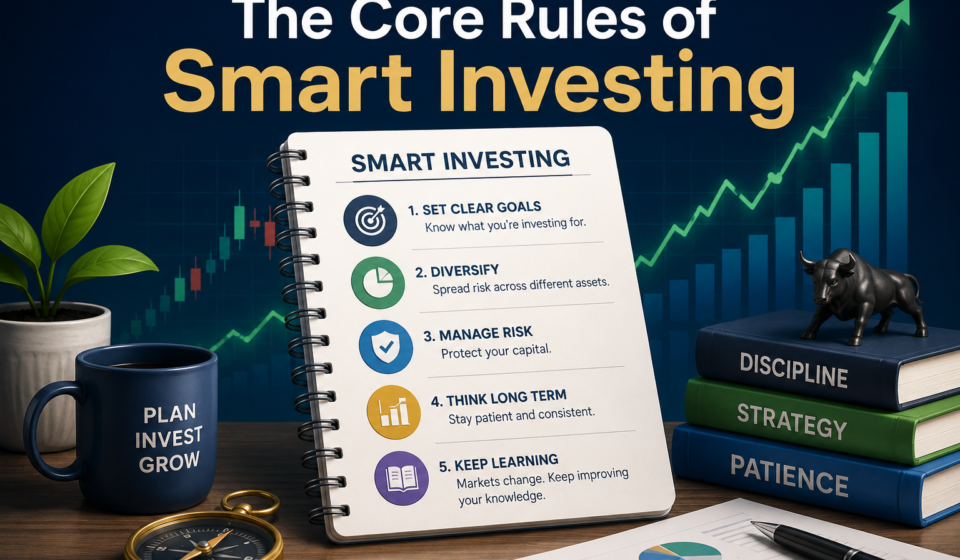

Investing can feel overwhelming with all the market noise and financial jargon. However, building long-term wealth doesn’t require predicting the future—it requires discipline, patience, and a solid framework.
Whether you’re just starting out or refining your strategy, here are the essential rules every investor should follow.
1. Lay the Groundwork First
Before putting a single dollar into stocks, real estate, or other assets, secure your financial baseline.
- Build an Emergency Fund: Keep 3 to 6 months’ worth of living expenses in a safe, liquid account (like a high-yield savings account). This ensures you won’t be forced to liquidate investments at a loss if unexpected expenses arise.
- Pay Off High-Interest Debt: Clear credit cards and personal loans first. Returning a guaranteed 15–20% by paying off debt beats trying to chase uncertain market returns.
2. Golden Rules of Portfolio Management
A. Diversify Your Risk
“Don’t put all your eggs in one basket.”
Spread your capital across different asset classes to insulate yourself against market downturns:
- Equities (Stocks): Driven by long-term growth.
- Bonds / Fixed Income: Provides stability and steady yields.
- Real Estate: Offers tangible value and potential passive income.
- Cash / Equivalents: Maintains liquidity for upcoming opportunities.
B. Time in the Market Beats Timing the Market
Trying to buy at the absolute bottom and sell at the top is a losing strategy for most.
- Use Dollar-Cost Averaging (DCA): Invest a fixed amount automatically at regular intervals (e.g., monthly). DCA smooths out market volatility over time and takes the guesswork out of investing.
C. Watch the Fees
Management fees, transaction costs, and expense ratios silently erode your compound growth over time.
- Look into low-cost index funds and ETFs, which offer broad market exposure at a fraction of the cost of actively managed funds.
3. Master Your Investor Psychology
Never Invest in What You Don’t Understand: If you can’t explain how an asset makes money in two simple sentences, pass on it.
Think in Decades, Not Days: True investment growth relies on the power of compound interest, which needs time to snowball.
Automate and Remove Emotion: Fear makes people sell at market lows, and greed makes them buy at peak bubbles. Stick to your strategy regardless of short-term headlines.


Hi, this is a comment.
To get started with moderating, editing, and deleting comments, please visit the Comments screen in the dashboard.
Commenter avatars come from Gravatar.