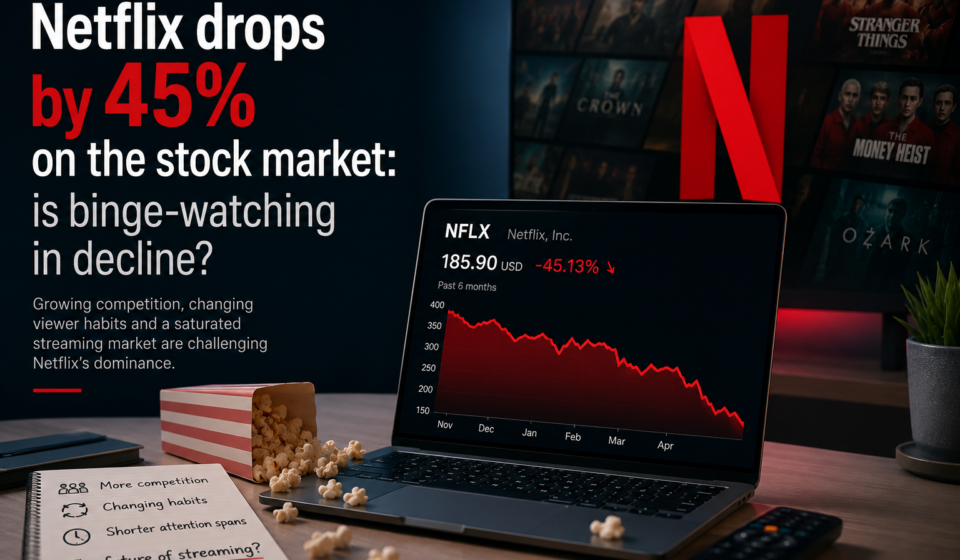

For years, Netflix defined the future of entertainment. It transformed the way people consumed content and turned binge-watching—watching multiple episodes of a series in one sitting—into a global cultural phenomenon. But after Netflix lost nearly 45% of its market value during one of its biggest stock market declines, many began asking the same question: Is binge-watching losing its appeal?
The answer is more nuanced than a simple yes or no.
Netflix’s stock decline wasn’t caused by viewers suddenly abandoning streaming. Instead, it reflected a combination of slowing subscriber growth, increasing competition, and changing consumer behavior. The streaming industry, once dominated by Netflix, is now crowded with competitors like Disney+, Prime Video, Max, Apple TV+, and others—all competing for the same audience.
Today’s viewers have more choices than ever before. Instead of maintaining multiple subscriptions year-round, many consumers subscribe to a platform for a specific show, binge-watch it over a weekend, and then cancel until the next must-watch release. This “subscription hopping” has become increasingly common and forces streaming platforms to rethink how they retain subscribers.
At the same time, the binge-watching model itself is evolving.
Releasing an entire season at once creates immediate excitement, but that buzz often fades within days. Social media conversations peak quickly before disappearing just as fast. That’s why many streaming services have shifted toward weekly episode releases. This strategy keeps audiences engaged for longer, encourages discussion between episodes, and extends the lifespan of a show’s popularity.
Even Netflix has started experimenting with split-season releases and alternative launch schedules, signaling that the company recognizes the need to adapt. The goal is no longer just to maximize viewing hours in a single weekend but to build sustained engagement over weeks or even months.
For businesses, marketers, and content creators, Netflix’s experience offers an important lesson. In today’s digital economy, attention has become one of the world’s most valuable resources. Success is no longer determined solely by producing more content—it’s about creating experiences that keep audiences coming back.
The streaming industry is entering a new phase. Growth is slowing, competition is fiercer than ever, and customer loyalty can no longer be taken for granted. Companies must continuously innovate, improve their content, and rethink their business models to remain competitive.
So, is binge-watching really in decline?
Not necessarily.
Millions of people still enjoy watching an entire season over a weekend. What is changing is how streaming platforms balance instant gratification with long-term engagement. The future is likely to combine multiple release strategies depending on the audience and the type of content.
Netflix’s stock market decline isn’t the end of binge-watching. Instead, it marks the beginning of a new chapter for the streaming industry—one where innovation, customer experience, and sustained engagement matter more than ever.
What do you think?
Is binge-watching still the future of entertainment, or are weekly releases the smarter strategy for streaming platforms?