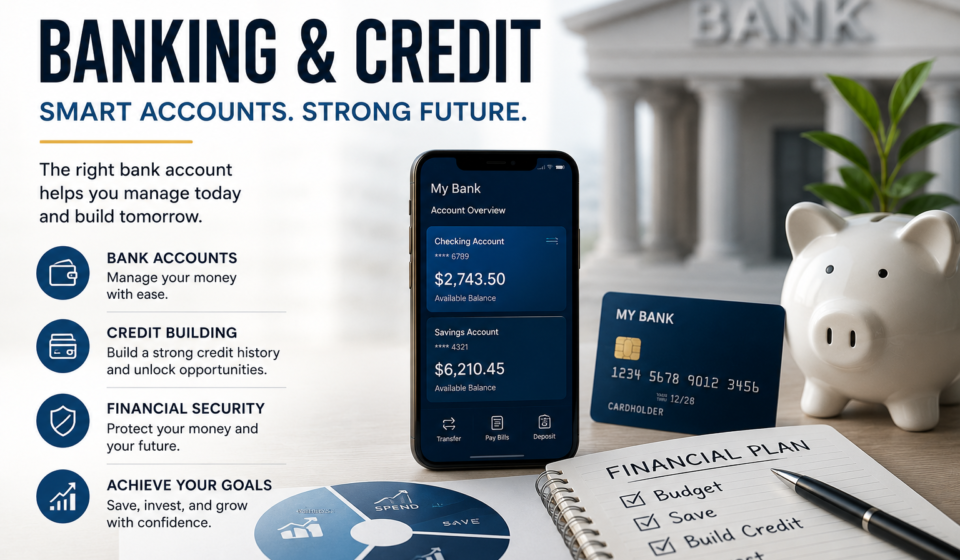

Managing your money effectively begins with choosing the right bank account. Whether you’re saving for the future, paying everyday expenses, or building a solid financial foundation, understanding how bank accounts work is essential. A well-managed bank account not only keeps your money safe but also helps you stay organized and achieve your financial goals.
Understanding Bank Accounts
A bank account is a secure place to store your money while giving you easy access to it whenever you need it. Most financial institutions offer different types of accounts, each designed for specific purposes.
The most common types include:
- Checking Accounts: Ideal for daily transactions, bill payments, debit card purchases, and direct deposits.
- Savings Accounts: Designed to help you save money while earning interest over time.
- Money Market Accounts: Often provide higher interest rates while allowing limited access to your funds.
- Certificates of Deposit (CDs): Offer fixed interest rates in exchange for keeping your money deposited for a specific period.
Understanding the differences between these accounts can help you choose the option that best fits your financial needs.
Why Choosing the Right Bank Matters
Not all banks offer the same services or benefits. Before opening an account, compare important features such as:
- Monthly maintenance fees
- Minimum balance requirements
- Interest rates
- ATM availability
- Mobile banking features
- Customer service quality
- Security and fraud protection
Many online banks now offer lower fees and higher interest rates than traditional banks because they have fewer operating costs. However, traditional banks may provide easier access to physical branches and personalized financial services.
Building Healthy Banking Habits
Opening a bank account is only the first step. Developing responsible banking habits can improve your overall financial health.
Some best practices include:
- Monitoring your account regularly
- Setting up direct deposit
- Automating bill payments
- Maintaining an emergency fund
- Avoiding overdraft fees
- Tracking your monthly spending
Using budgeting apps or your bank’s mobile application can help you stay in control of your finances and identify unnecessary expenses.
Understanding Credit and Banking
Banking and credit often go hand in hand. Many banks offer credit cards, personal loans, and mortgages that can help build your credit history when used responsibly.
Maintaining a good credit score allows you to qualify for better loan terms, lower interest rates, and increased financial opportunities in the future.
To build healthy credit:
- Pay bills on time
- Keep credit card balances low
- Avoid unnecessary debt
- Monitor your credit report regularly
- Only apply for credit when needed
Responsible credit management complements good banking habits and creates a strong financial foundation.
Final Thoughts
Choosing the right bank account is one of the simplest yet most important financial decisions you can make. The right account helps you manage your money efficiently, reduce unnecessary fees, earn interest on your savings, and prepare for future financial goals.
Whether you’re opening your first account or considering switching banks, take the time to compare your options carefully. Smart banking decisions today can lead to greater financial security, improved credit, and long-term financial success.